
Job Overview
Location: Peterborough, Ontario
Structure: Detached two-storey house with garage
Problem: Wildlife activity reported in the attic, consistent with squirrel entry
Service: Squirrel removal and roofline exclusion
Visits: Two visits
Summary
Our team completed a two-visit squirrel removal service at a detached residential property in Peterborough. The work focused on identifying roofline entry points, installing one-way doors to allow animals to exit, and completing permanent exclusion using galvanized materials. A final follow-up visit confirmed successful removal and no further activity.
Background / Property Context
The property is a two-storey detached home with multiple roof slopes, soffit intersections, and roof vents. These features create common vulnerability points for wildlife access, particularly when openings develop along roofline transitions.
Customer Concern
The homeowner reported hearing wildlife activity in the attic during the morning hours. Based on the timing and behaviour described, squirrel activity was suspected, and an inspection was scheduled.
Inspection & Findings
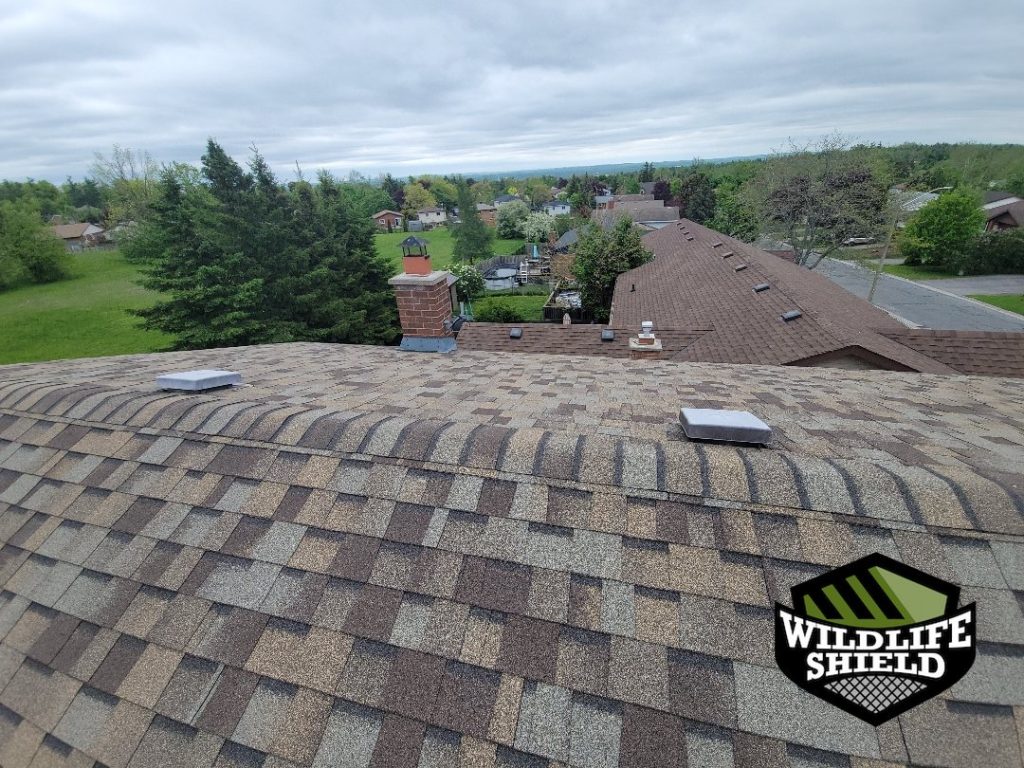
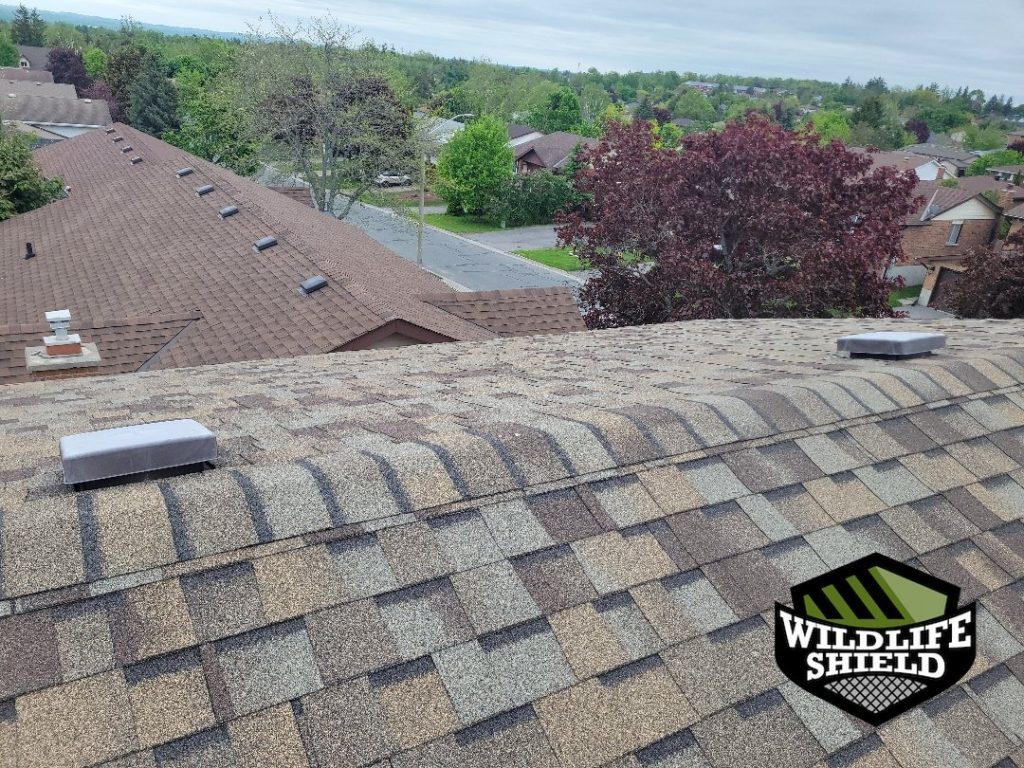
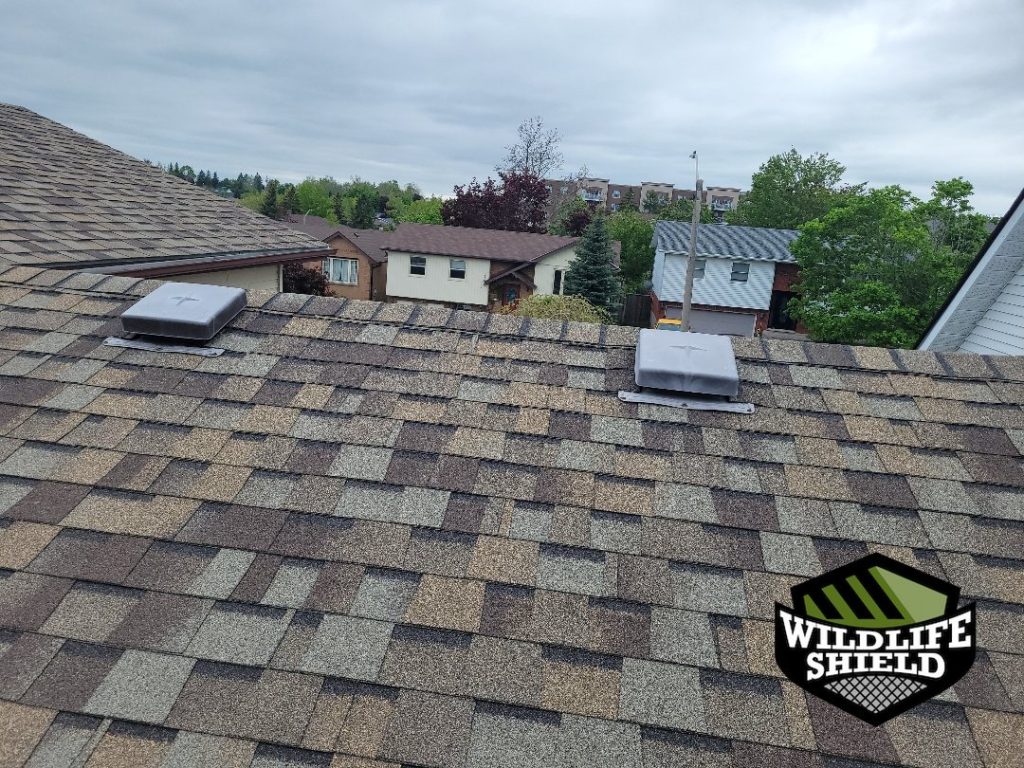
During the initial visit, our technician conducted a full exterior roof inspection. Activity points were identified at soffit intersections along the roofline. The opening size indicated previous disturbance consistent with a larger animal attempt, but current access was suitable for squirrels. Several roof vents were also identified as requiring protective covers to prevent future entry.
Photos from the inspection show:
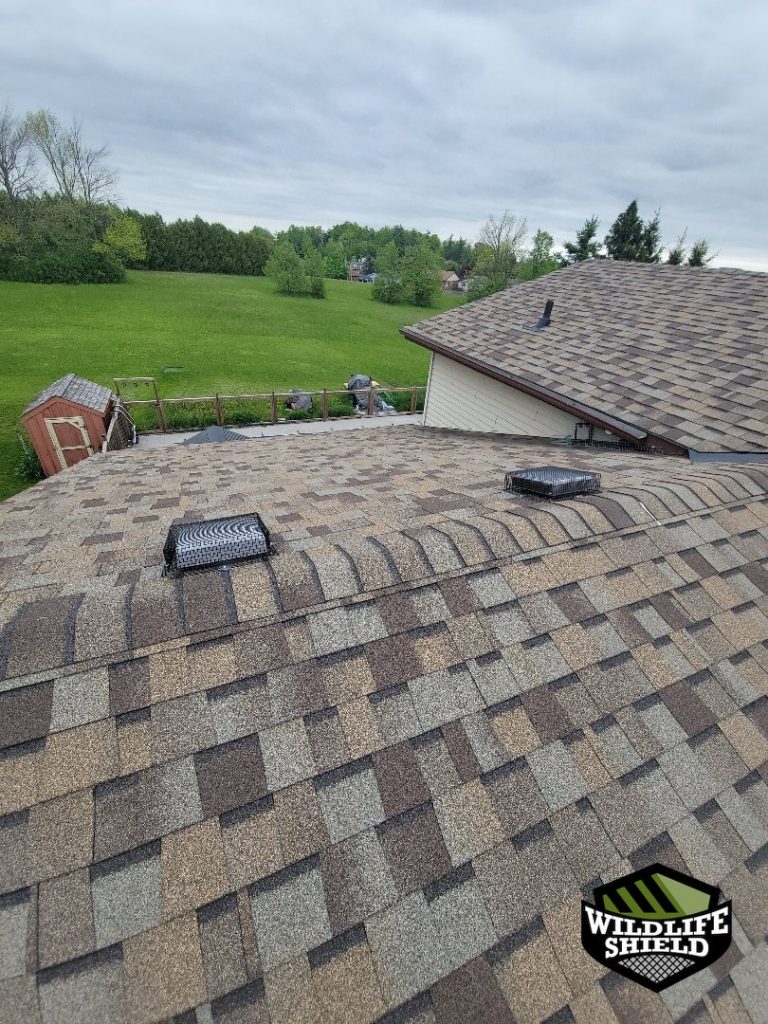
- Multiple roof slopes with exposed vent openings
- Soffit intersections where gaps were present
- Areas suitable for installation of screening and vent protection
Cause Analysis
Squirrels commonly access attics by exploiting gaps at soffit intersections and unprotected roof vents. Roofline junctions and aging building materials can loosen over time, creating entry points. Once an opening is established, repeated use by wildlife can enlarge the access area and lead to attic activity.
Treatment / Removal
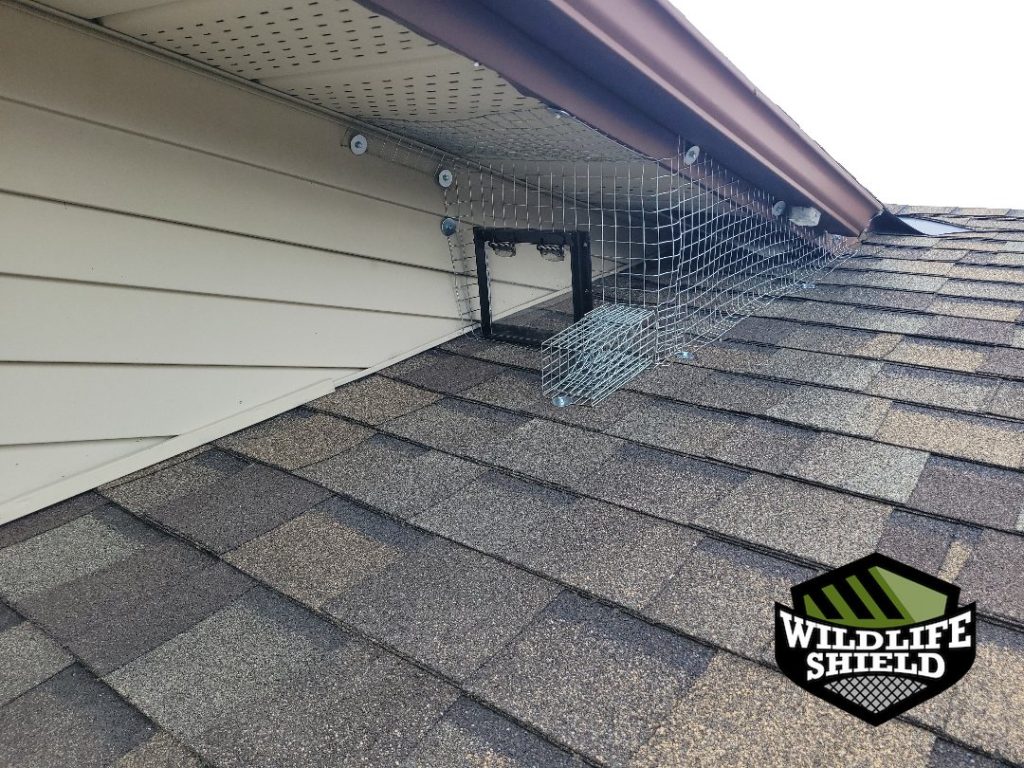
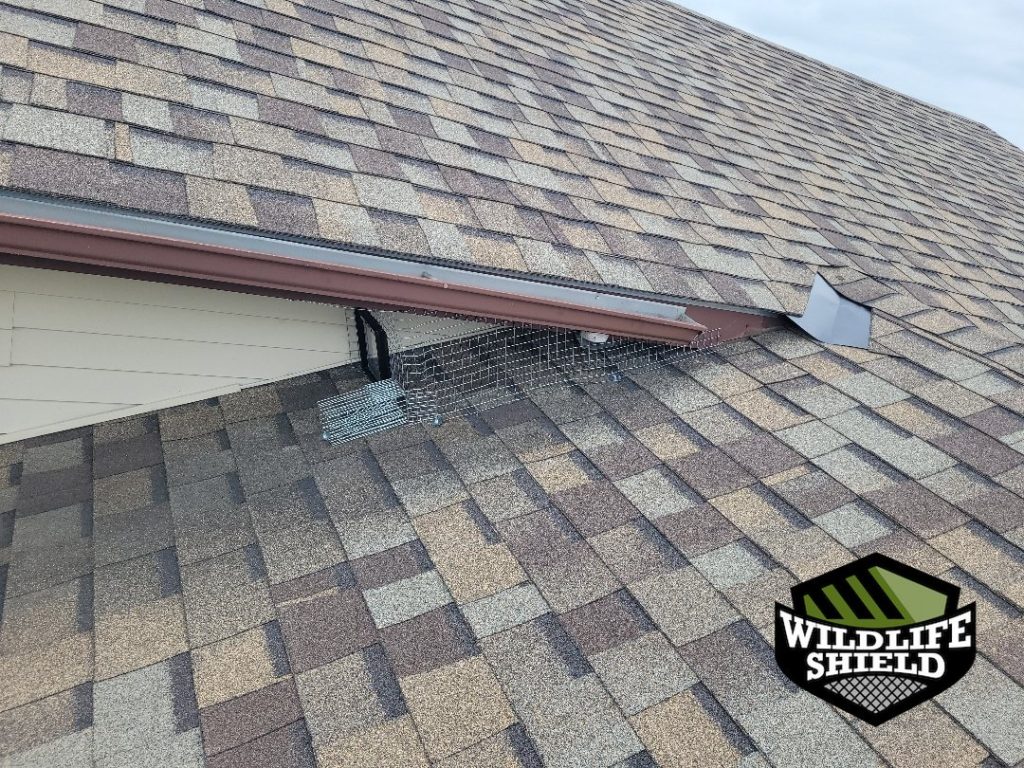
On the first visit, one-way doors were installed at the identified soffit intersection entry points to allow squirrels to exit the attic space without re-entry. The approach used was non-lethal and designed to resolve the issue without trapping.
Additional work completed during this visit included:
- Installation of one-way doors at active entry points
- Installation of two galvanized steel roof vent covers
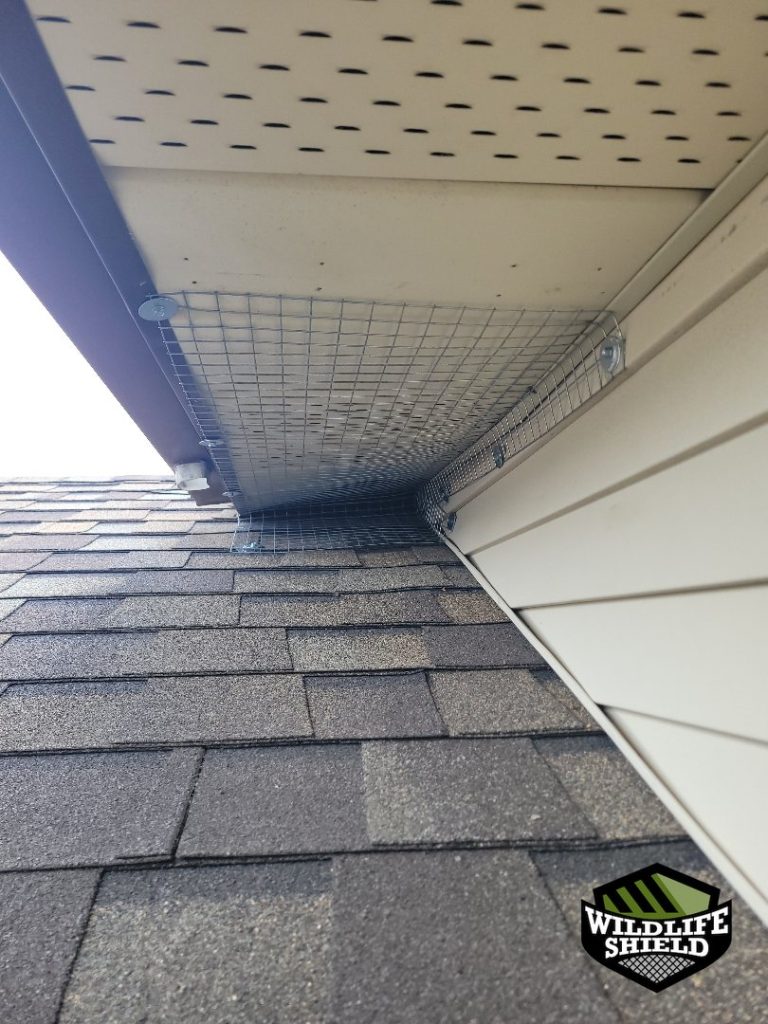
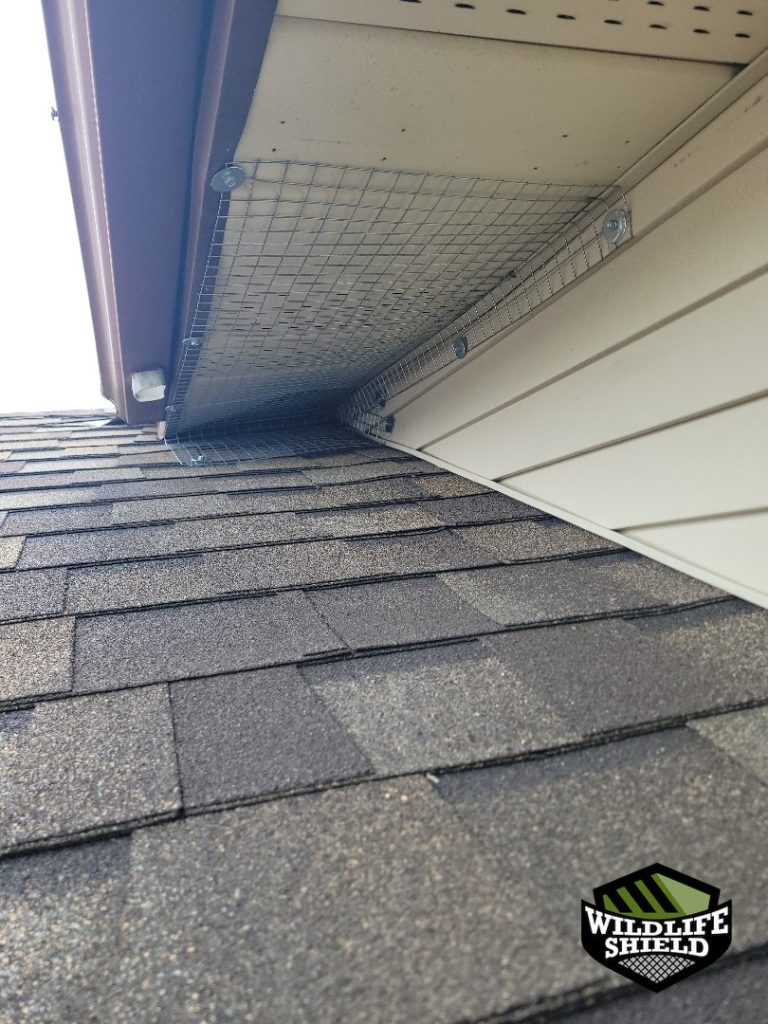
- Sealing of two soffit intersections using galvanized steel mesh
All materials were mechanically fastened to ensure durability and resistance to wildlife intrusion.
Exclusion & Repairs
Galvanized steel mesh was installed at vulnerable soffit intersections to close off existing gaps once the animals had exited. Roof vent covers were secured over exposed vents to prevent future access while maintaining proper ventilation. The exclusion work was completed to match the roofline and maintain long-term protection.
Photos from the completed work show:
- Galvanized vent covers secured over roof vents
- Mesh screening fitted tightly along soffit intersections
- Clean integration with existing roofing and siding materials
Outcome & Confirmation
At the second visit, the homeowner reported no further wildlife activity. The one-way doors were removed, all previously protected entry points were permanently sealed, and the full exclusion was inspected. No signs of continued squirrel activity were observed, and the site was confirmed wildlife-free at the time of service completion.
Technician Notes
The work was completed by Grant over two visits. Final inspection confirmed that all identified entry points were secured and that the roofline exclusions were holding as intended. No further issues have been reported since completion.
This service was completed by our Peterborough wildlife team. For wildlife removal inquiries in Peterborough, contact 705-410-3708.