
Job Overview
Location: Peterborough, Ontario
Structure: Detached two-story house
Problem: Squirrel activity reported in attic during early morning hours
Service: Humane squirrel removal and full roofline exclusion
Visits: 4
Summary
We responded to reports of early morning wildlife noise within the attic of a detached two-story home in Peterborough, This activity is conducive of Squirrel activity. Inspection confirmed squirrel entry through soffit intersections along the roofline. Over four visits, we installed one-way doors at active entry points, sealed vulnerable roof edges with galvanized steel mesh, and addressed newly identified openings as activity shifted. Final inspection confirmed no further wildlife activity and all exclusion work was secured.
Background / Property Context
The structure is a detached two-story residential home with asphalt shingles, roof vents, aluminum soffits, and multiple roofline transitions. Winter weather conditions were present during service, requiring careful roof access and safety-controlled ladder positioning.
The roof design included soffit return intersections and open drip edge areas, both of which can present access opportunities for squirrels when materials loosen or gaps develop.
Customer Concern
The homeowner reported scratching and movement sounds in the attic during early morning hours. The timing and roof-level noise pattern were consistent with squirrel activity.
The concern was potential nesting inside the attic space and ongoing structural damage at entry points.
Inspection & Findings
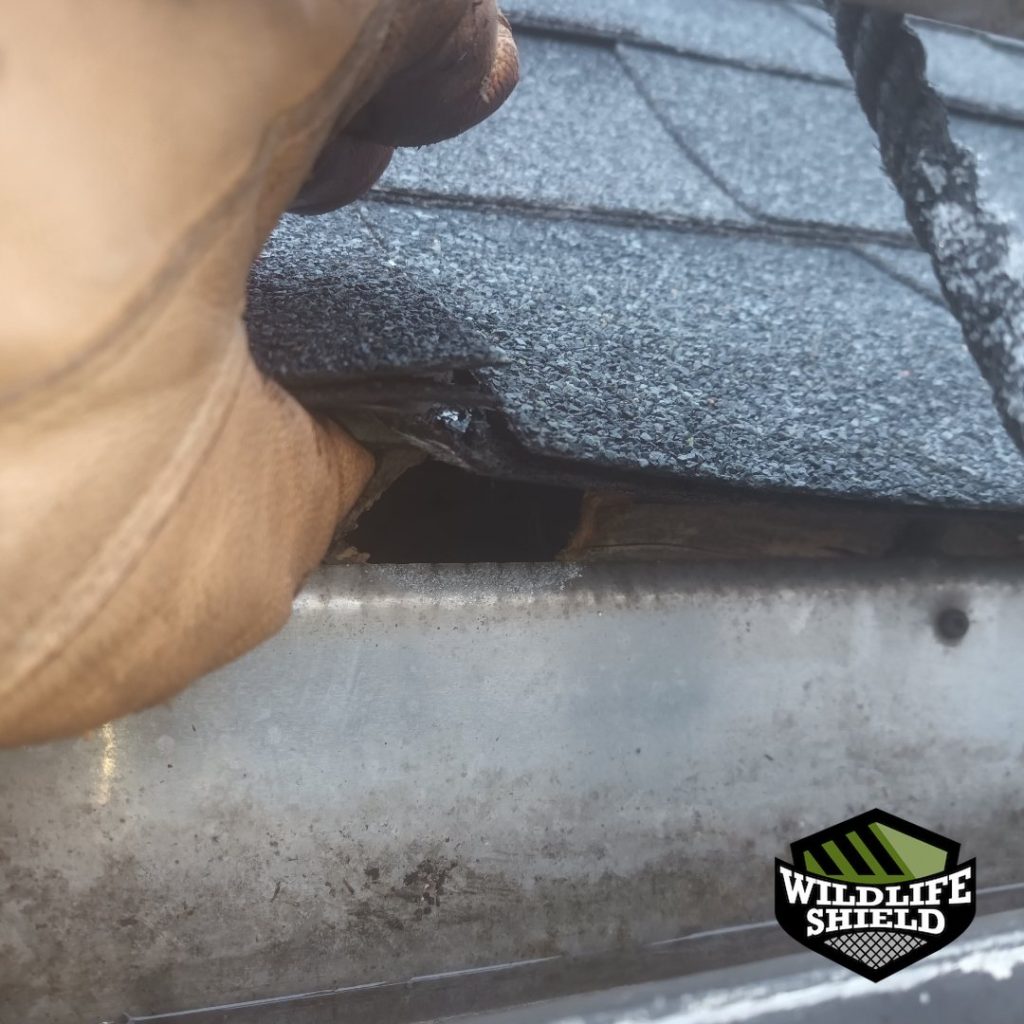
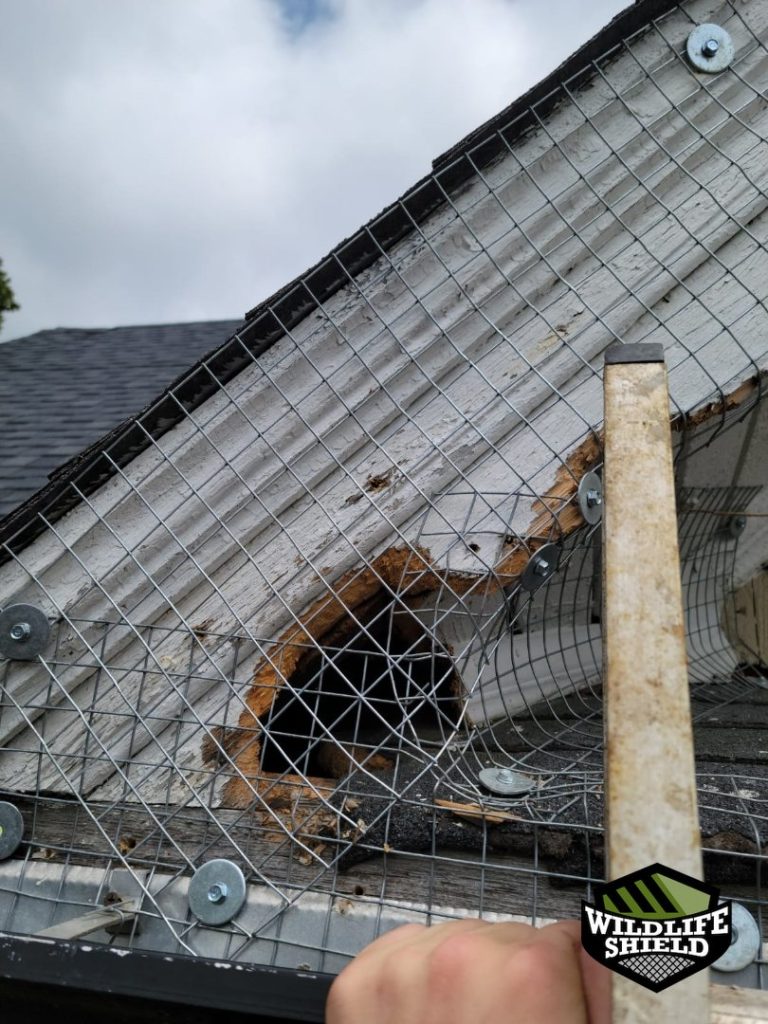
During the initial exterior roof inspection, our technician Grant identified the primary entry point at a soffit intersection. The opening showed chew enlargement consistent with squirrel access.
Photos show visible damage at the soffit return where wood substrate was exposed and surrounding material had been displaced. A secondary access route was also identified at the same intersection, indicating multiple squirrels using the location.
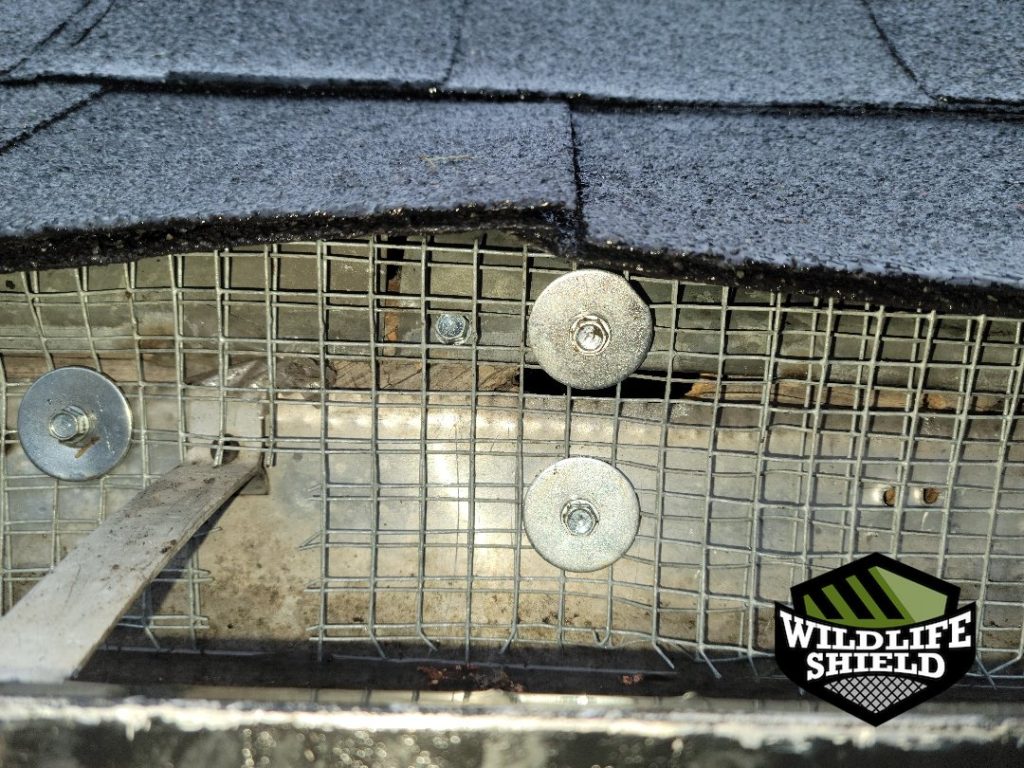
Additional vulnerabilities were observed along approximately five feet of roof edge where drip edge gaps allowed potential access beneath the shingles.
On subsequent visits, new activity was reported. Further inspection revealed:
- A newly developed soffit intersection entry point
- An open drip edge gap providing direct access beneath the shingles
- Minor separation between roofing materials and fascia components
Each new opening corresponded with reported activity patterns.
Cause Analysis
Squirrels commonly exploit roofline intersections and soffit returns where construction materials meet at angles. Seasonal contraction and expansion, combined with aging wood components, can create small gaps that are easily enlarged by gnawing.
Winter conditions increase attic sheltering behaviour as squirrels seek insulated nesting areas. Once an initial entry is established, nearby roofline seams may also be tested and expanded.
Treatment / Removal
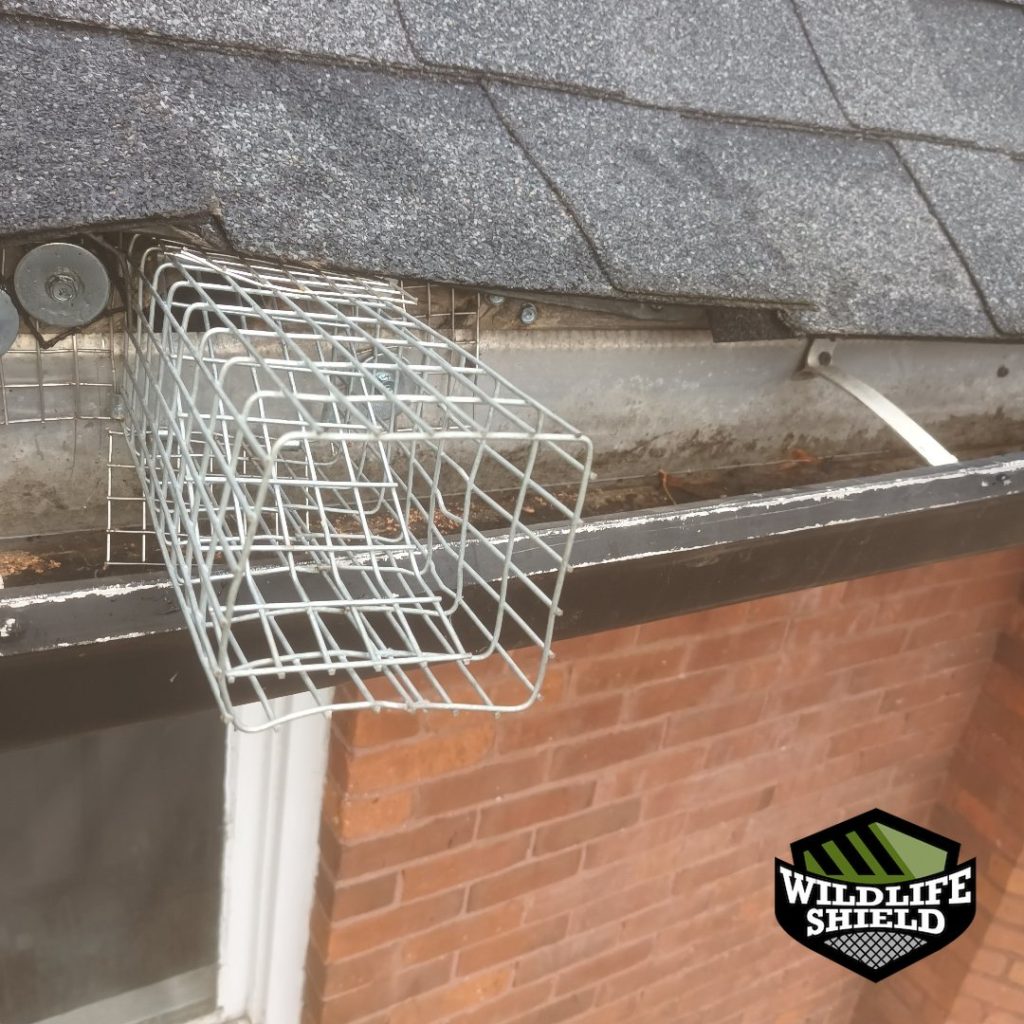
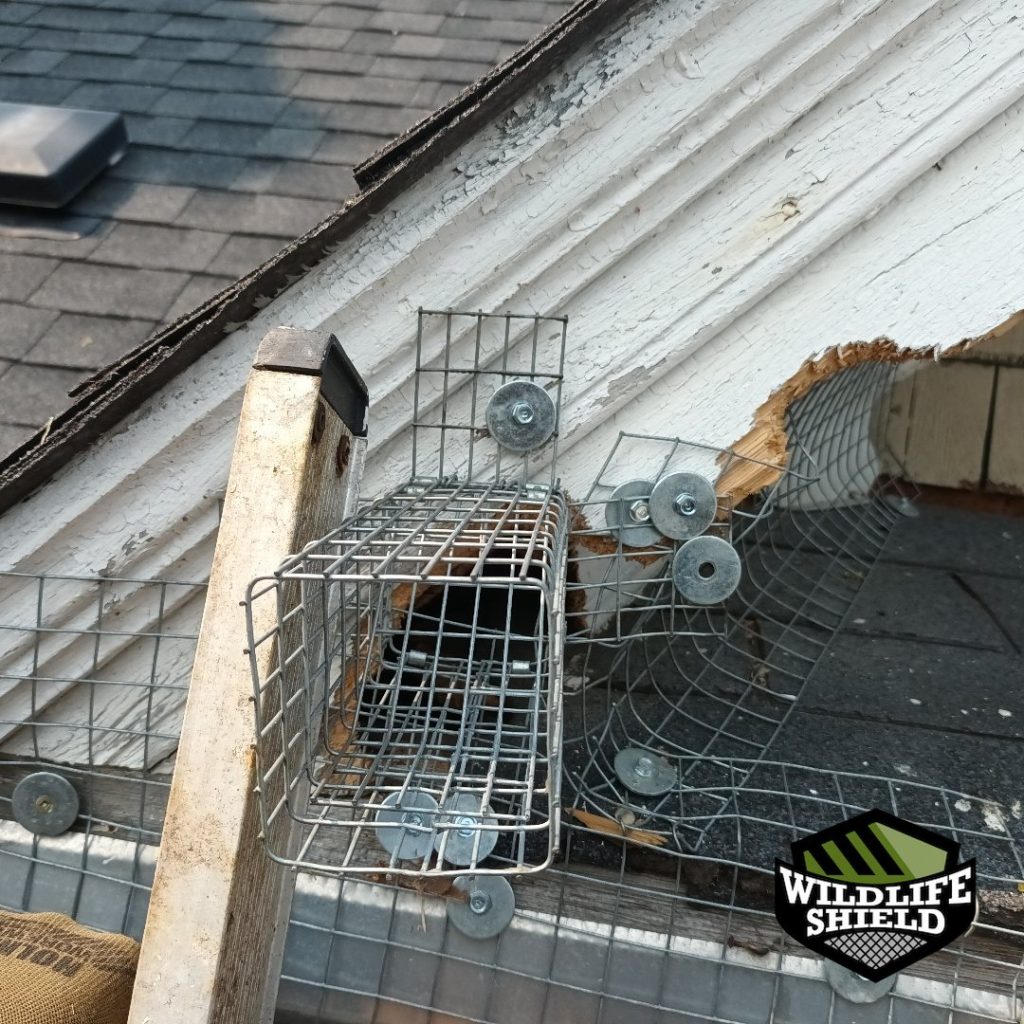
On Visit 1, Grant installed two squirrel one-way doors at the primary soffit intersection to allow adult squirrels to safely exit while preventing re-entry.
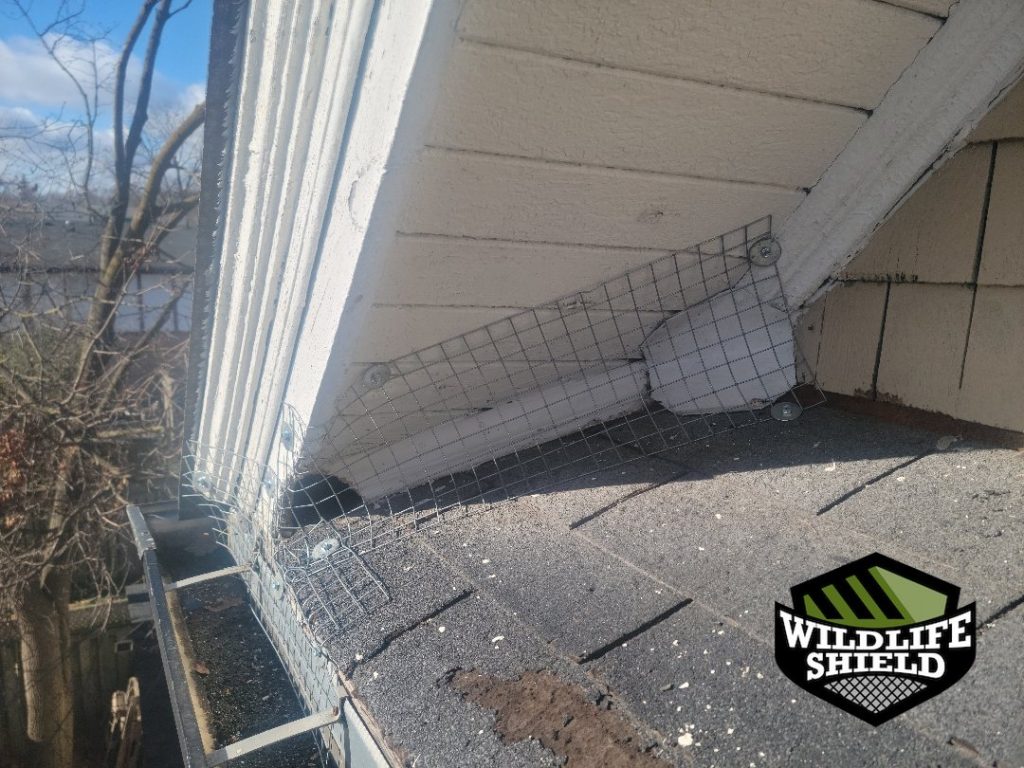
At the same time, we sealed approximately five feet of vulnerable roof edge using galvanized steel mesh secured beneath the shingles and fastened with washers to prevent lifting.
On Visit 2, after reports of continued activity, we identified a new soffit intersection entry point and installed an additional one-way door.
On Visit 3, a newly opened drip edge gap was located. A one-way door was installed over this access point to allow safe exit.
All wildlife removal methods were humane and non-lethal, allowing the animals to vacate naturally.
Exclusion & Repairs
Following confirmed cessation of activity on Visit 4:
- All one-way doors were removed
- Entry points were permanently sealed with galvanized steel mesh
- Roofline intersections were reinforced
- Drip edge gaps were secured
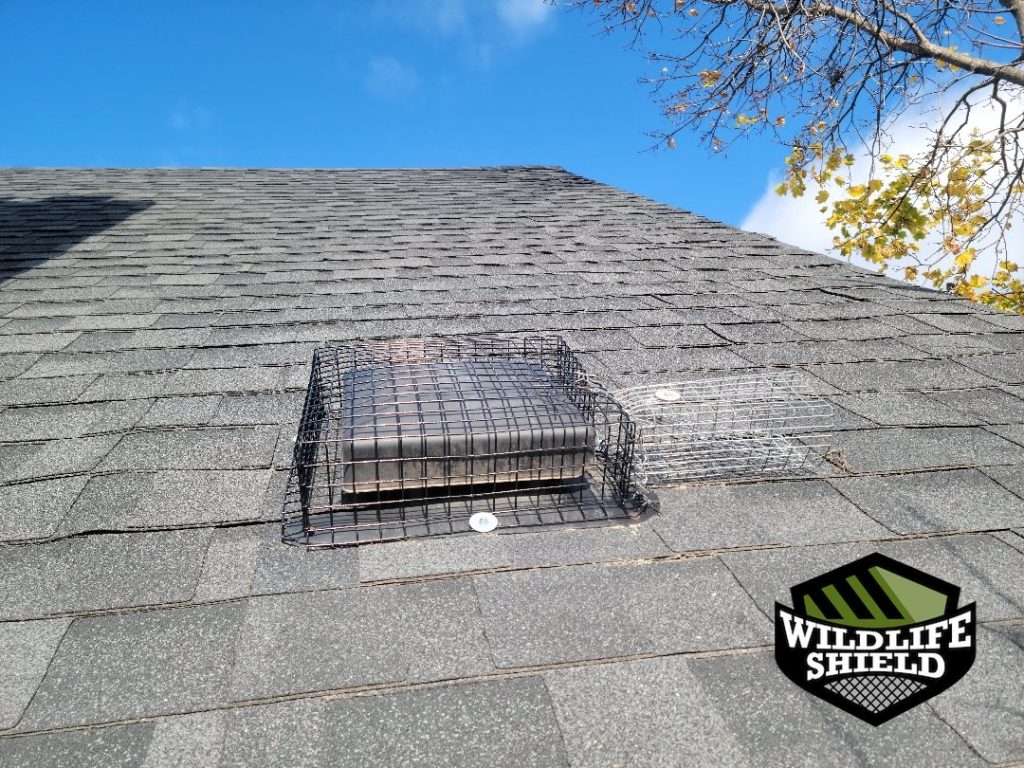
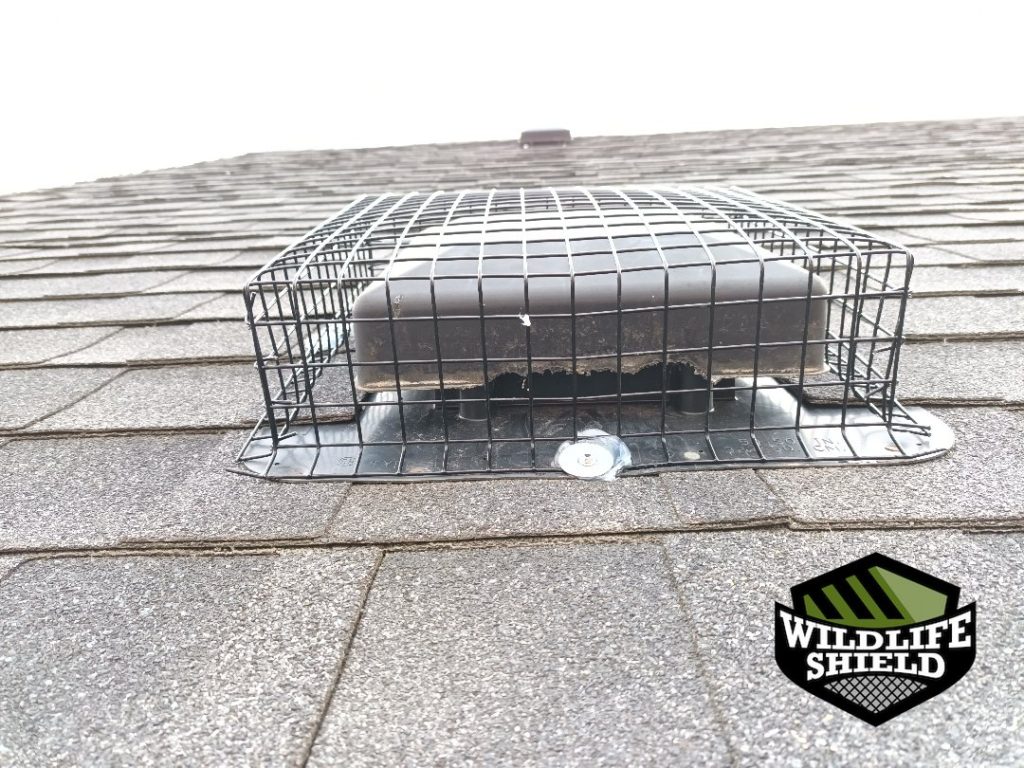
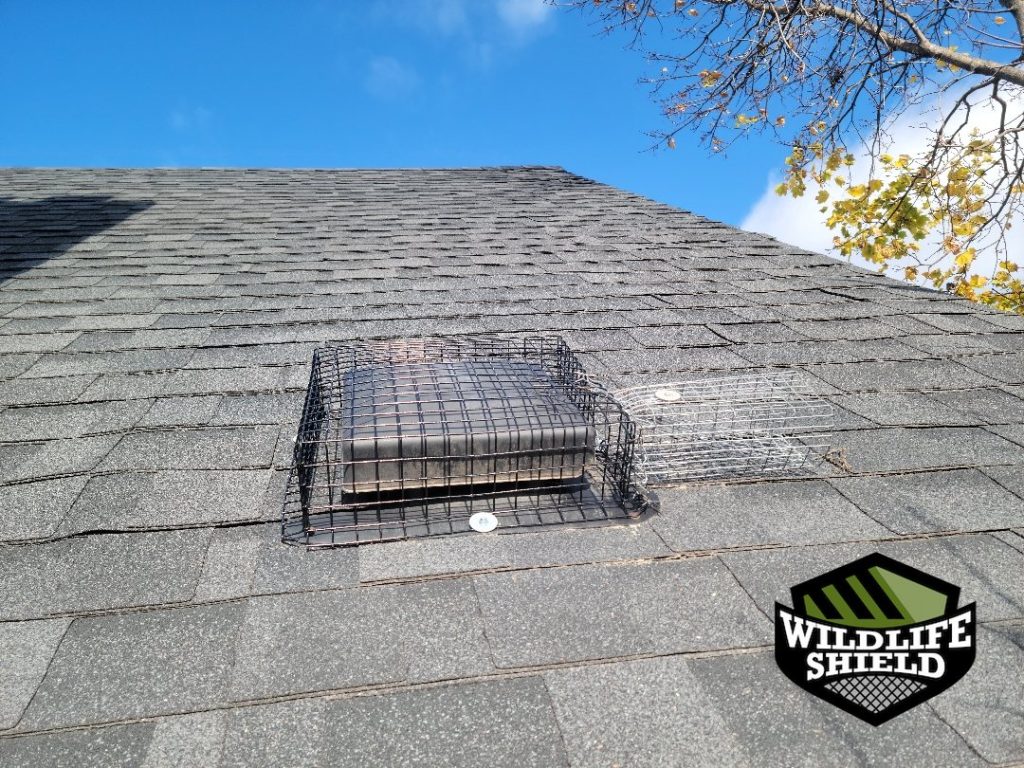
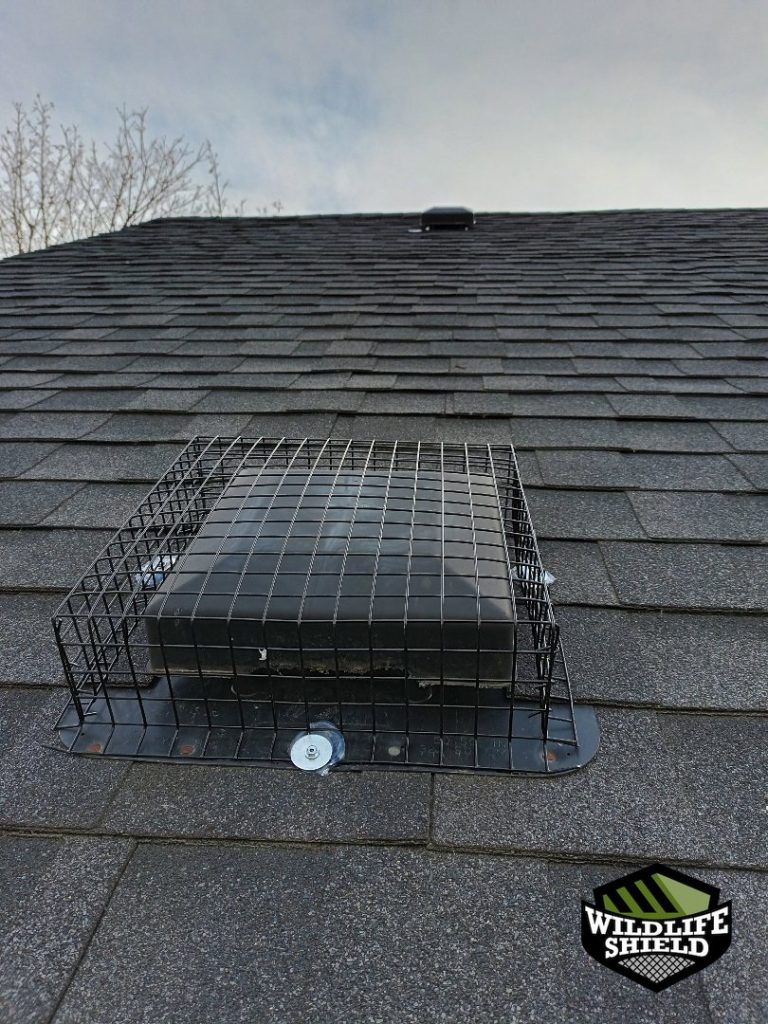
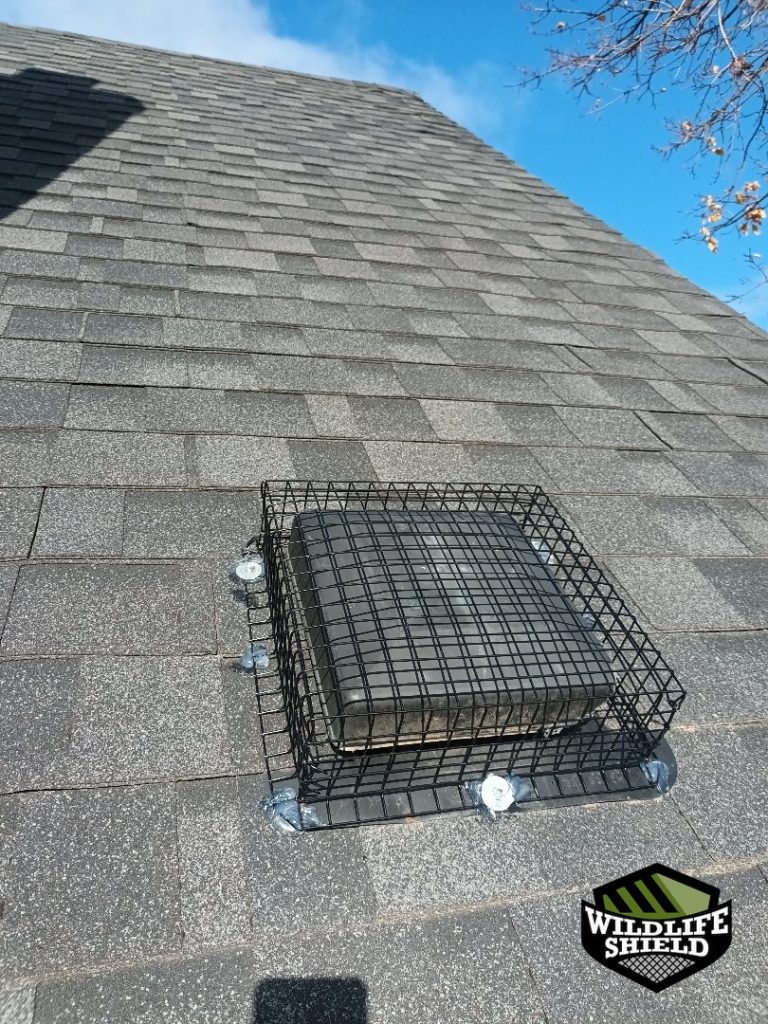
Photos show mesh installations fitted tightly along soffit intersections and roof vent bases, fastened with corrosion-resistant hardware to prevent lifting or re-entry. Mesh coverage extended beyond damaged areas to reinforce surrounding vulnerable sections.
All exclusion materials were installed to maintain ventilation while preventing wildlife access.
Outcome & Confirmation
At the final visit, the homeowner reported no further attic noise or roof-level activity.
We removed all temporary one-way doors, confirmed exclusion integrity, and performed a final roofline inspection. No additional wildlife access points were observed.
No further squirrel activity has been reported since completion of the work.
Technician Notes
Grant conducted a full perimeter roof inspection during each visit due to shifting activity. Winter conditions required cautious ladder placement and roof access procedures.
Multiple access points were identified over time, consistent with squirrel persistence when initial nesting sites are disrupted. All identified vulnerabilities were addressed before project completion.
This service was completed by our Peterborough wildlife team. For wildlife removal inquiries in Peterborough, contact 705-410-3708.