
Job Overview
Location: Peterborough, Ontario
Structure: Detached one-story house
Problem: Nocturnal wildlife activity in attic consistent with raccoon presence
Service: Humane raccoon removal and roof vent exclusion
Visits: 3
Summary
We responded to reports of nighttime attic noise at a detached residential property in Peterborough. Our inspection confirmed raccoon access through soffit intersections and roof vent openings. Over three visits, we installed one-way doors, reinforced roof vents with galvanized steel covers, completed soffit exclusion work, and confirmed full resolution of wildlife activity.
Background / Property Context
The structure is a single-story detached home with multiple roof vents and soffit intersections. The roofline includes vent housings and transitional areas where soffit panels meet roofing components. These intersections can become vulnerable over time due to weather exposure and material separation.
Work was conducted between November and December. Winter conditions did not impact access or safety during service.
Customer Concern
The homeowner reported hearing movement and noise in the attic during nighttime hours. Activity was described as heavy footstep-like sounds on the roof and above the ceiling area, which is consistent with raccoon behaviour during colder months when attic spaces are used for shelter.
Inspection & Findings
Technician Grant conducted a full exterior roof inspection during the initial visit.
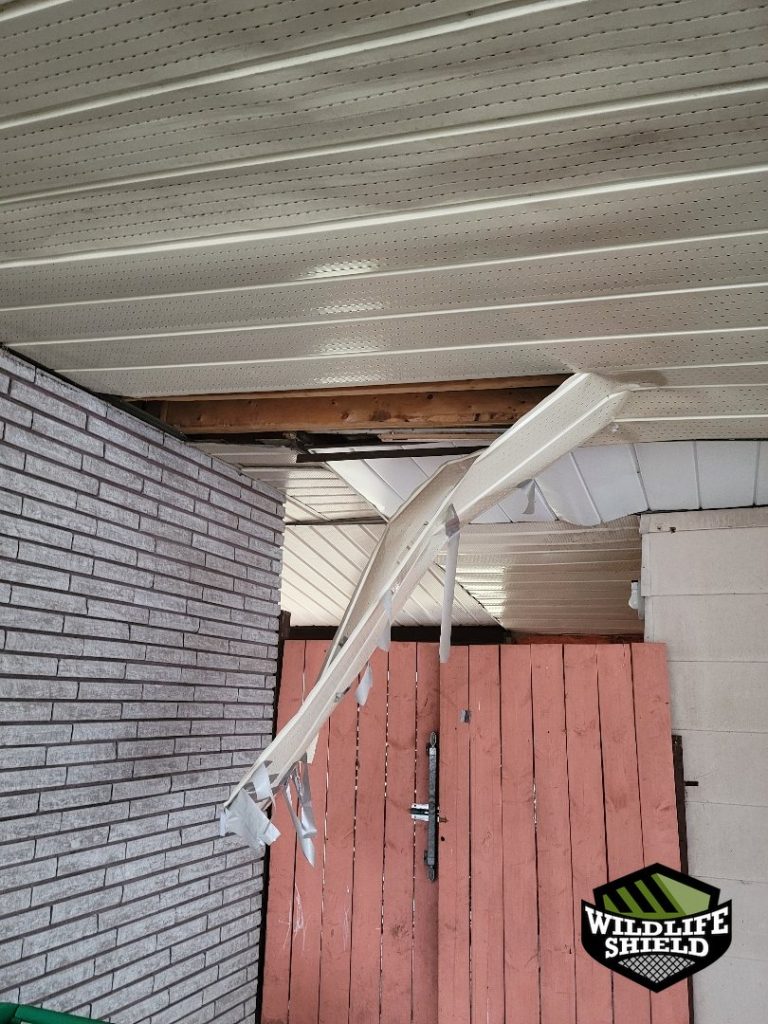
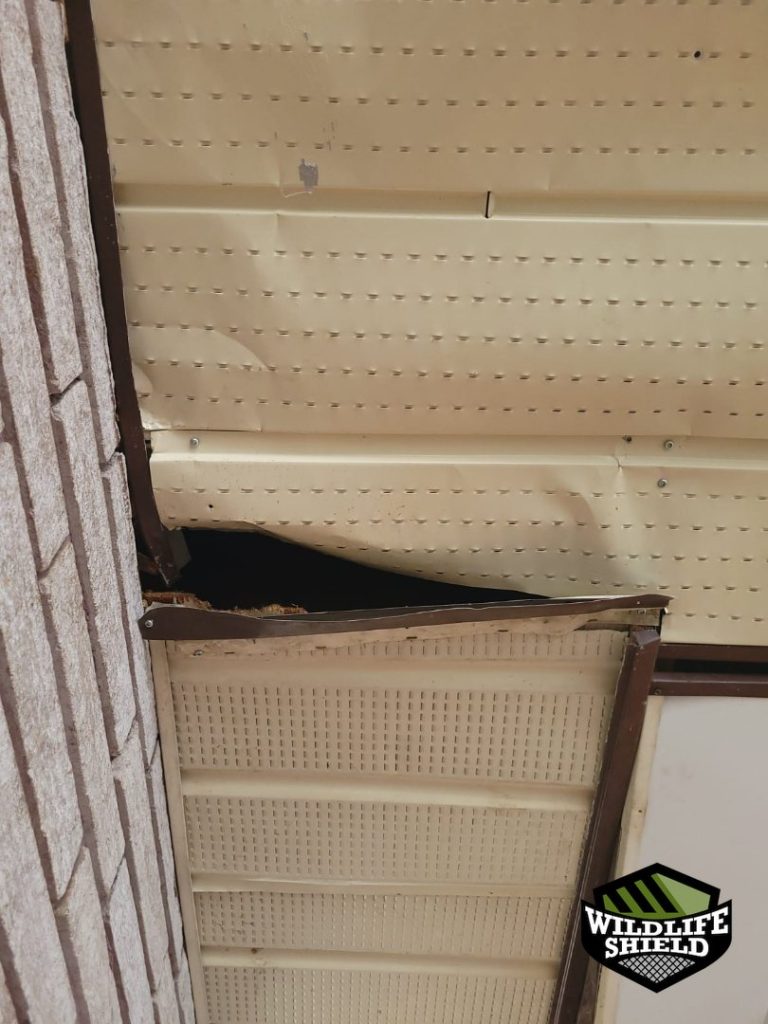
The primary entry point was identified at a soffit intersection near a roof transition. Visible gaps were present in the soffit area, and sections appeared displaced. Additional vulnerability was noted at roof vent housings.
Photos show:
- A soffit section pulled downward, creating an accessible opening.
- A visible gap at the soffit return corner.
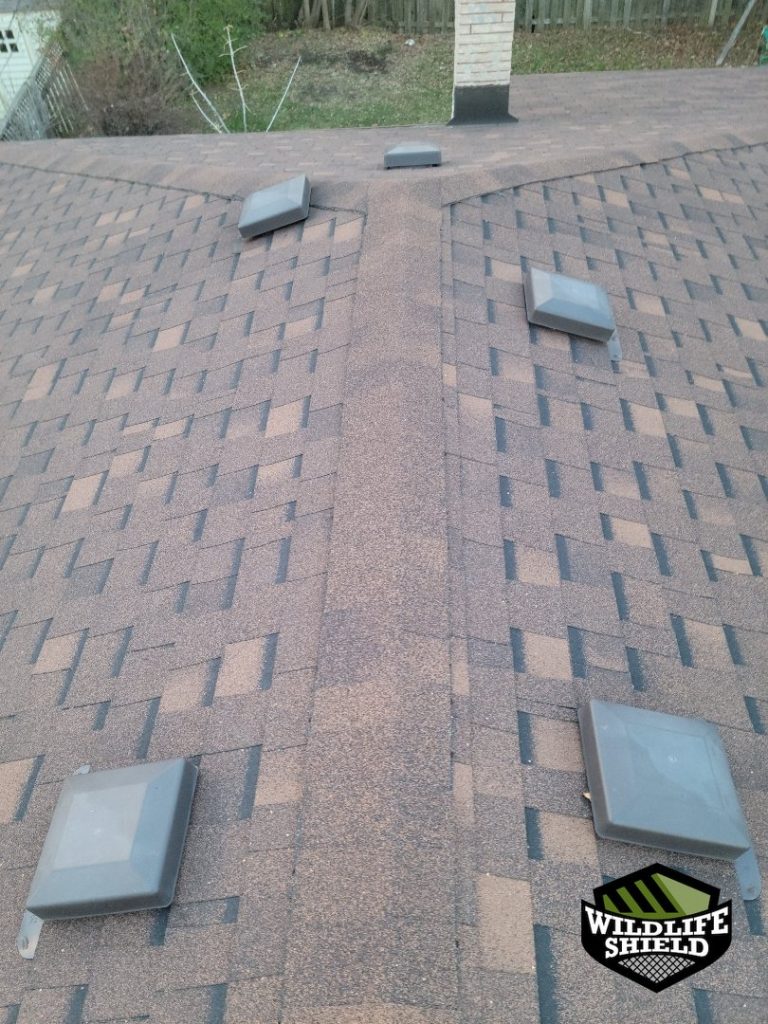
- Roof vents without protective screening prior to work.
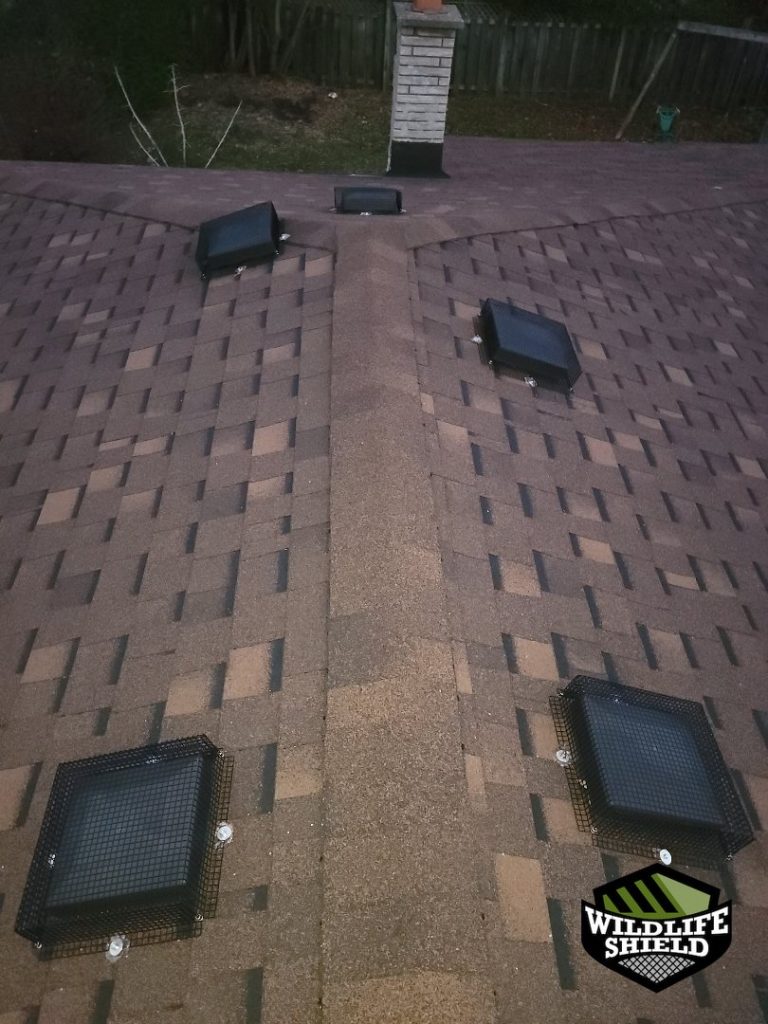
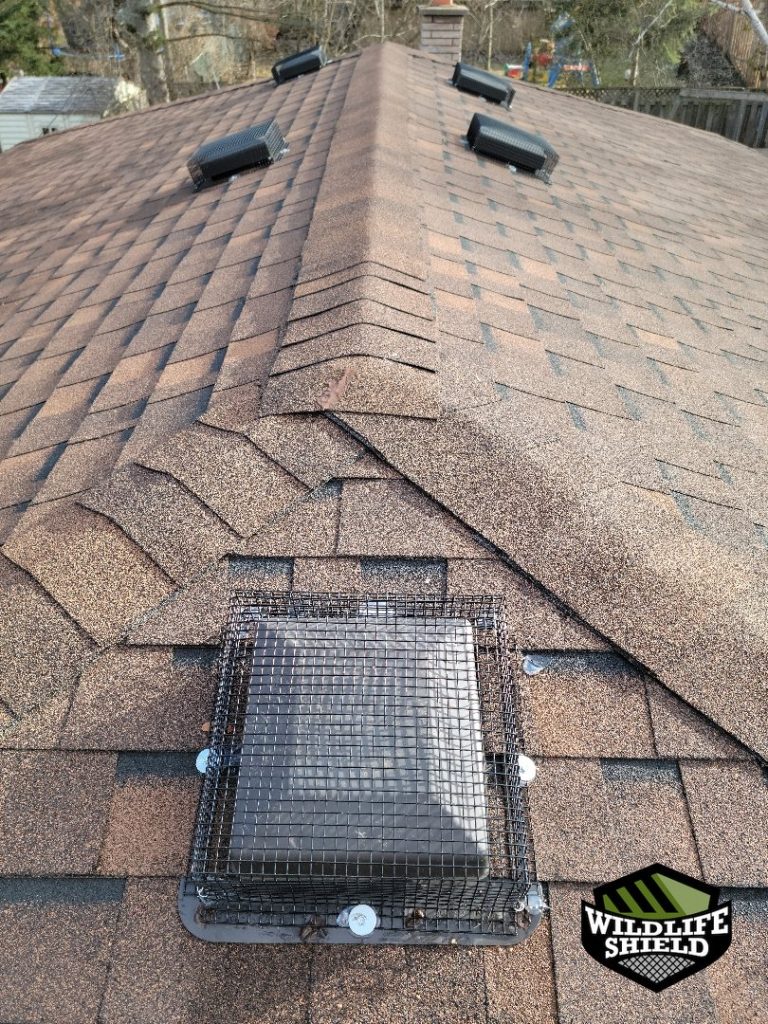
- Installation of galvanized steel vent covers and screening.
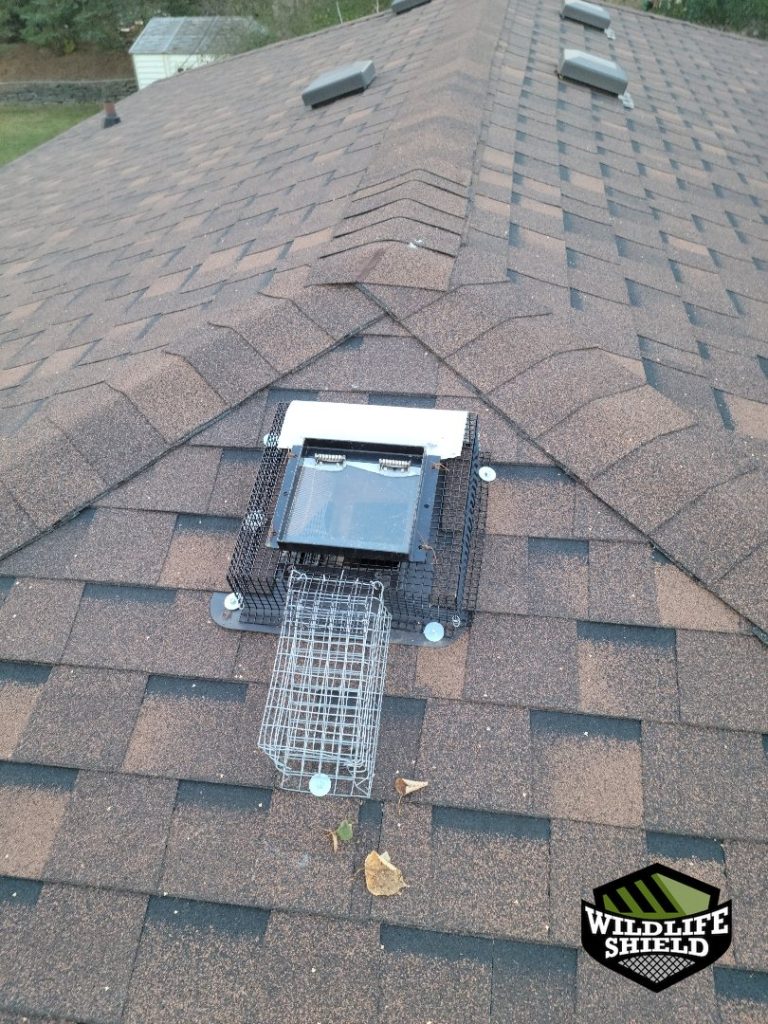
- One-way door systems mounted over active entry points.
Activity indicators were consistent with raccoon use of these openings for attic access.
Cause Analysis
Raccoons commonly access attic spaces by exploiting weaknesses at soffit intersections and roof vent openings. Transitional roof areas and aging soffit materials can separate or loosen, creating entry gaps large enough for raccoons to enlarge.
Roof vents without reinforced steel covers are particularly vulnerable, as plastic or lightweight metal vent caps can be displaced or lifted. Once an accessible gap forms, raccoons will repeatedly use the same entry point until properly excluded.
Treatment / Removal
Visit 1
Upon confirming the main entry location, Grant installed a raccoon one-way door at the primary access point to allow animals to exit safely while preventing re-entry.
Work completed on site included:
- Installation of two raccoon one-way doors, including a secondary door at a roof vent entry point
- Installation of six galvanized steel roof vent covers
- On-site approval and authorization to proceed with exclusion work
All removal methods were humane and non-lethal, allowing the animals to vacate naturally.
Visit 2
The homeowner later reported additional noise, suggesting secondary access activity.
Grant returned and performed further exclusion measures, including:
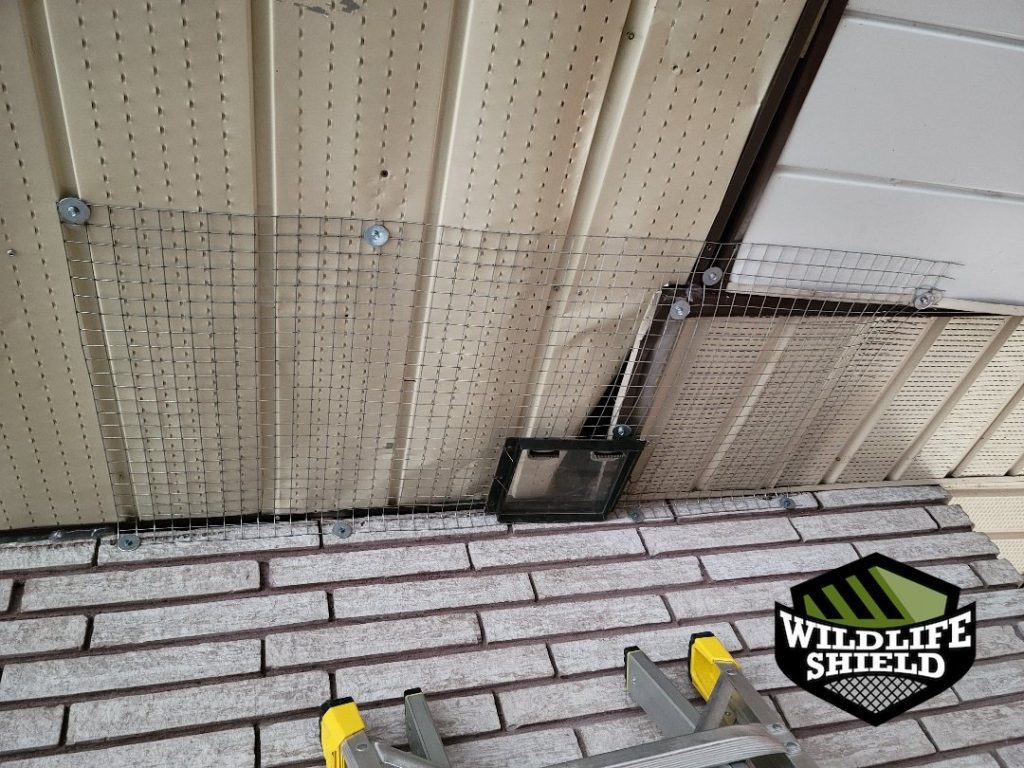
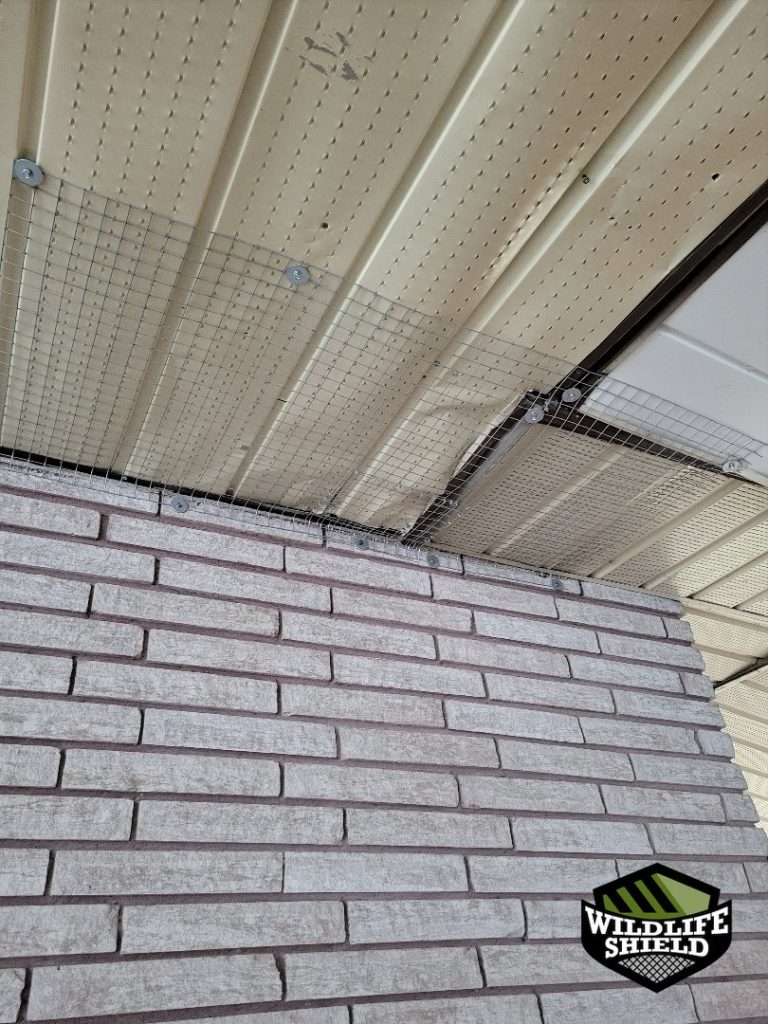
- Sealing approximately four feet of soffit using galvanized steel mesh
- Installation of an additional one-way door at a newly identified access location
All vulnerable soffit gaps were reinforced using mechanically fastened galvanized mesh to prevent further wildlife intrusion.
Visit 3
During the final visit, the homeowner reported no continued activity.
All one-way doors were removed. Entry points were permanently sealed and reinforced. A full inspection of previously identified vulnerabilities confirmed secure exclusion.
No further wildlife activity was observed or reported following completion of the work.
Exclusion & Repairs
Exclusion measures included:
- Galvanized steel screening at soffit intersections
- Reinforced roof vent covers on six vent housings
- Secure fastening at transition points
- Removal and sealing of all temporary one-way systems
All materials used were wildlife-resistant and appropriate for long-term exterior exposure.
Outcome & Confirmation
Following removal of one-way doors and completion of exclusion work, the attic remained quiet with no additional wildlife reports.
All known entry points were sealed, vent openings reinforced, and soffit gaps secured. The structure was confirmed wildlife-free at the conclusion of service.
Technician Notes
Grant completed a full roof-level inspection during each visit to confirm no secondary vulnerabilities were present. Additional exclusion was performed proactively after new activity was reported to ensure complete resolution.
All work was conducted safely and in accordance with humane wildlife control standards.
This service was completed by our Peterborough wildlife team. For wildlife removal inquiries in Peterborough, contact 705-410-3708.