
Job Overview
Location: Peterborough, Ontario
Structure: Detached one-story house with single garage
Problem: Nocturnal wildlife activity in attic consistent with raccoon presence
Service: Raccoon removal and roofline exclusion
Visits: 2
Summary
We responded to reports of nighttime attic activity at a detached residential property in Peterborough. Based on the timing and sound description, raccoon activity was suspected. A full roof inspection confirmed access at soffit intersections. Humane one-way doors were installed to allow animals to exit, followed by permanent exclusion and reinforcement of vulnerable roof components.
Background / Property Context
The structure is a single-story home with asphalt shingle roofing and multiple roof penetrations, including static roof vents and soffit return intersections. The roof design and adjacent tree coverage provide accessible pathways for climbing wildlife.
Work was completed in October. Weather conditions were stable and outside of raccoon baby season.
Customer Concern
The homeowner reported ongoing nighttime noise in the attic space. Activity patterns suggested a larger wildlife species moving across the roof and within the attic cavity.
Inspection & Findings
Technician Grant conducted a full exterior roof inspection.
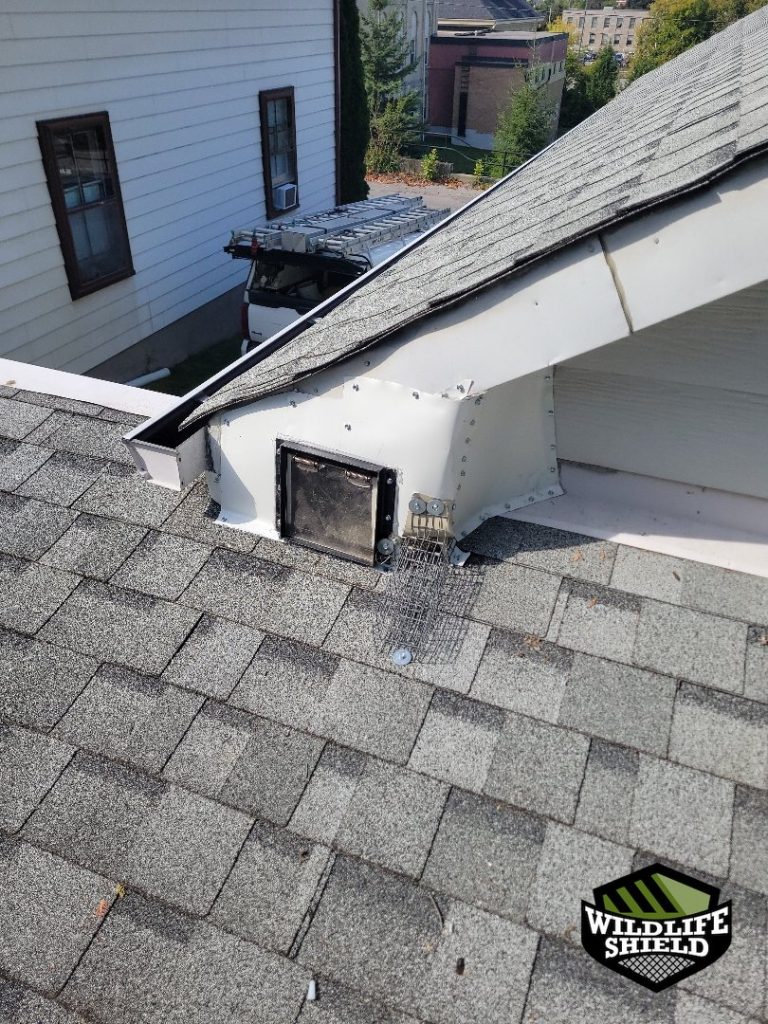
The primary entry point was identified at soffit intersections where materials had separated, creating a gap sufficient for raccoon access. Evidence of use was visible at this junction.
During inspection, it was also identified that a squirrel had been utilizing the same area for entry.
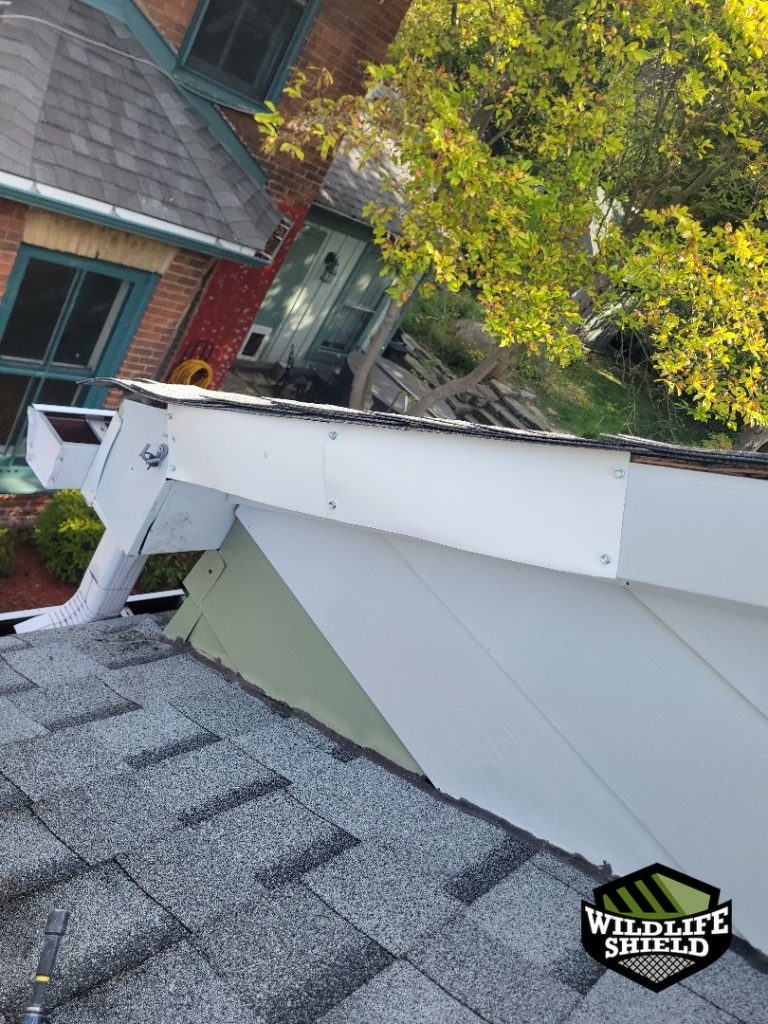
Roof vents were unprotected and vulnerable to wildlife intrusion. Sections of fascia showed minor separation requiring reinforcement.
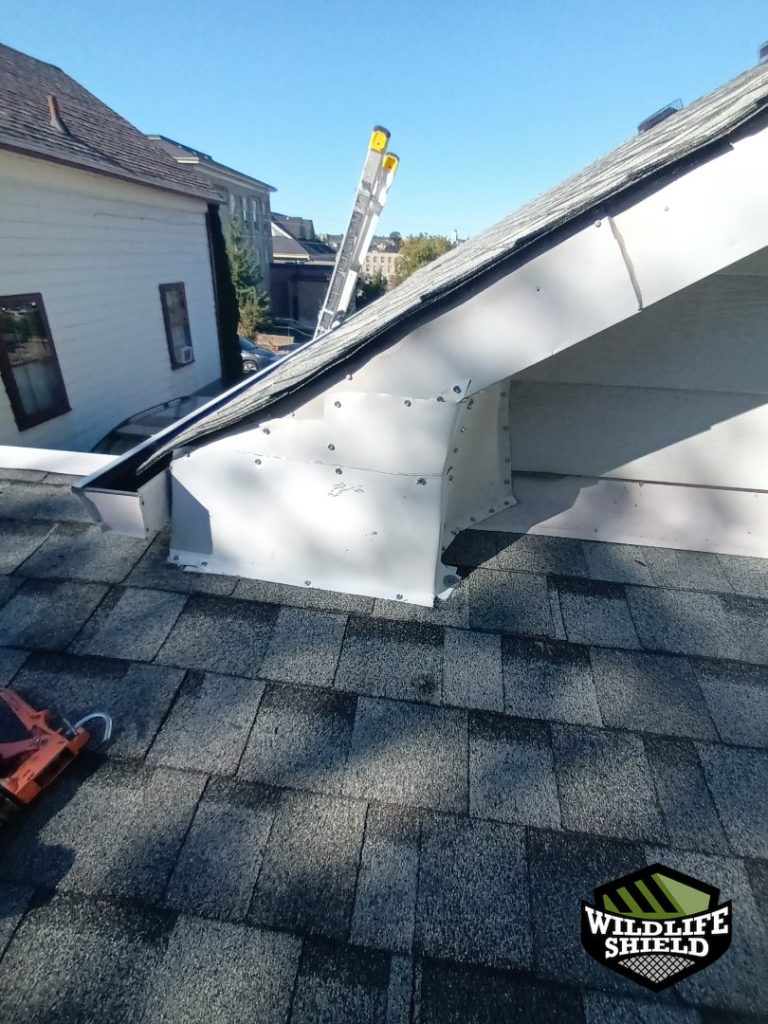
Photo documentation shows:
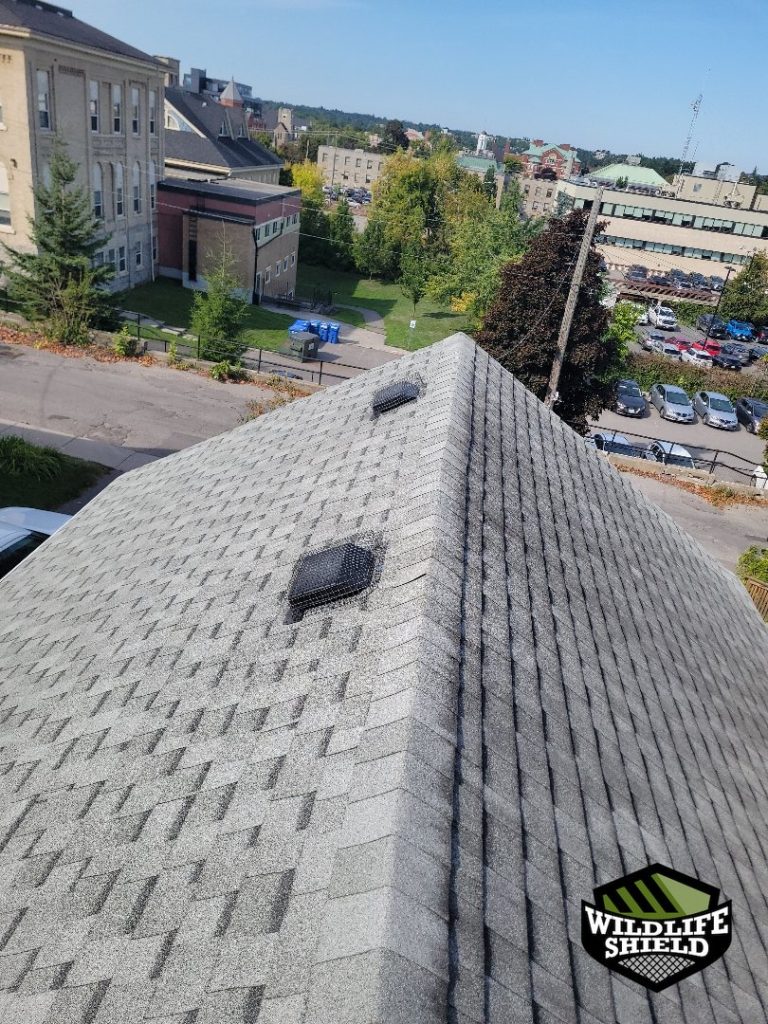
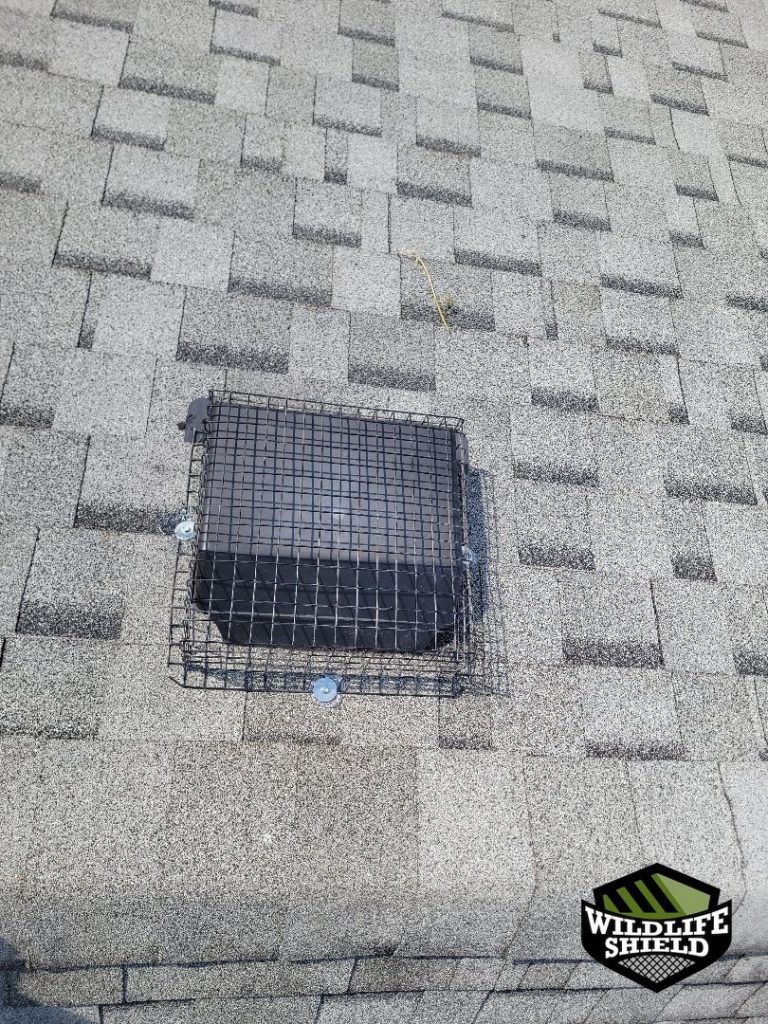
• Galvanized steel mesh installed over roof vents
• Custom-fitted sheet metal flashing at soffit intersections
• One-way door installed at the primary entry point
• Reinforced fascia section secured with metal flashing
Only visible roof-level details are referenced.
Cause Analysis
Soffit intersections are common vulnerability points where different rooflines meet and materials overlap. Over time, minor separation or flexing can create openings large enough for raccoons to exploit.
Unscreened roof vents further increase the likelihood of attic access. The property’s roofline design and accessible climbing routes contributed to wildlife locating and using these entry points.
Treatment / Removal
Humane removal measures were implemented.
Grant installed:
• One raccoon one-way door at the primary soffit intersection
• One squirrel one-way door at the same access area
• Three galvanized steel roof vent covers
The one-way doors allowed animals to exit the attic safely while preventing re-entry.
Exclusion & Repairs
Following door installation, structural reinforcement was completed:
• Two feet of fascia were sealed using formed sheet metal
• Soffit intersections were secured with custom-fitted metal flashing
• Roof vents were permanently screened with galvanized steel mesh
All materials were mechanically fastened to ensure long-term durability and resistance to wildlife tampering.
Outcome & Confirmation
At the second visit, the homeowner reported no further attic activity.
The one-way doors were removed.
All exclusion points were sealed permanently.
The roofline repairs were inspected and confirmed secure.
No further wildlife issues have been reported since completion of the work.
Technician Notes
Grant confirmed that activity was limited to attic access through soffit intersections. No secondary interior damage requiring remediation was observed at the time of service.
All work was completed using humane, non-lethal exclusion methods.
Final inspection verified the integrity of installed vent covers, flashing, and sealed entry points.
This service was completed by our Peterborough wildlife team. For wildlife removal inquiries in Peterborough, contact 705-410-3708.